


Emotional or physical trauma that “rewires” the stress response.
A family history of pain sensitivity.
It frequently appears alongside Lupus, Rheumatoid Arthritis, or other inflammatory disorders.

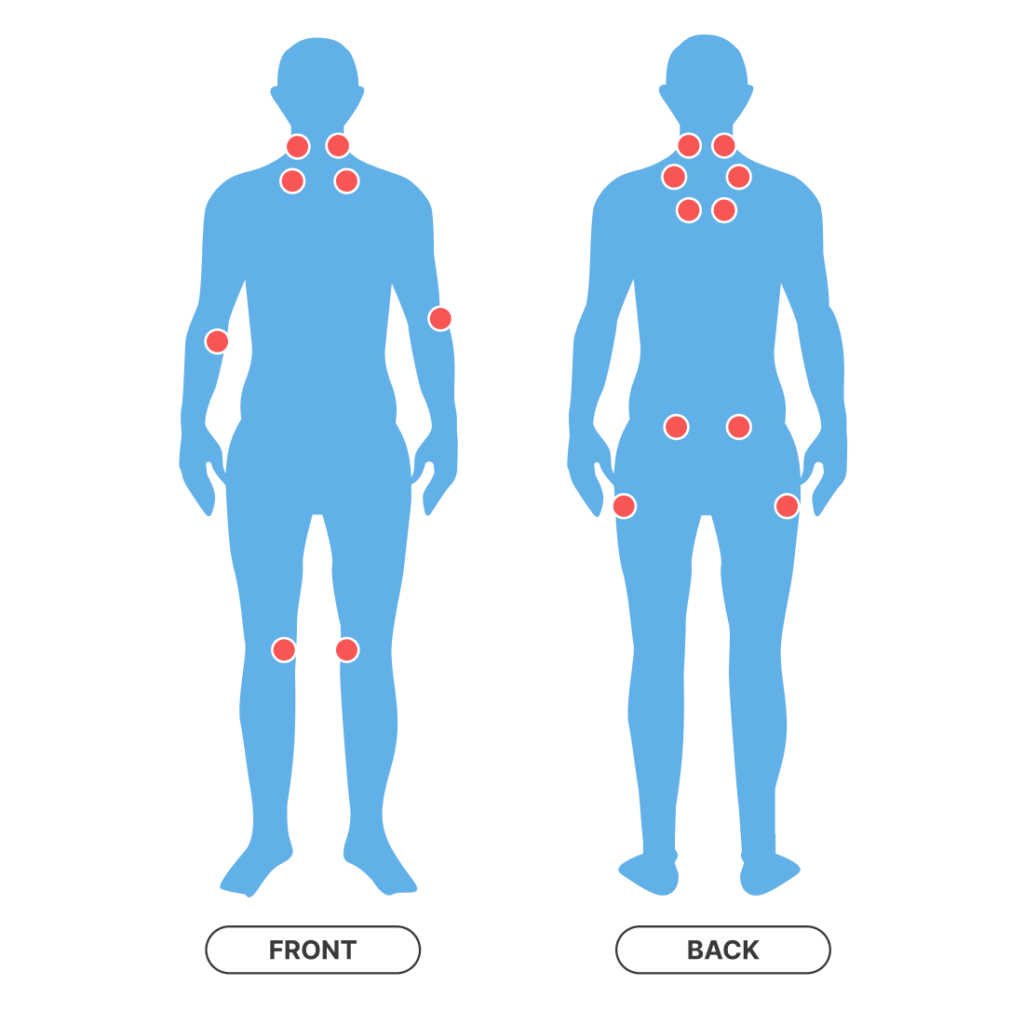
We use specific medications (such as nerve stabilizers) and antidepressants that help rebalance the brain’s pain-signaling chemicals.
We design ultra low impact movement plans that build strength without triggering a flare up.
For specific hot spots, we offer Trigger Point Injections and MLS Laser Therapy to soothe local tissue inflammation.
Cognitive strategies to help manage the psychological toll of chronic pain and improve sleep hygiene.
We perform a detailed Sensitivity Map and review your medical history to rule out other conditions. Our goal is to validate your experience and build a data-driven plan for your recovery.
Yes, but the type of exercise is critical. We focus on graded movement starting very slowly with stretches and water-based activities to desensitize the nervous system rather than stress it.
By improving your sleep quality and reducing the constant "noise" of pain signals, many patients find that their mental clarity naturally returns.
While there is no specific "Fibromyalgia Diet," many patients find that an anti-inflammatory approach helps significantly. Reducing processed sugars and caffeine can lower systemic inflammation and help stabilize energy levels. Our specialists can guide you on nutritional adjustments that complement your medical treatment to reduce the frequency of flare-ups.
Fibromyalgia is a chronic condition, but it is manageable. With the right combination of nerve-stabilizing treatments, specialized physical therapy, and lifestyle modifications, many of our patients return to full-time work and active social lives. Our goal at Allevia is to move you from surviving a flare-up to thriving in your daily routine.
Copyright © 2026 All Rights Reserved.
Site developed by