At Allevia Centers, we believe that understanding your pain is the first step toward lasting relief. Your spine is a complex masterpiece of engineering a structure of bones, joints, and nerves that supports your body and protects your most vital information highway: the spinal cord.
Your spine is the central pillar of your body’s musculoskeletal system. It is a marvel of biological engineering that protects your nervous system while allowing you to sit, stand, walk, and twist. At Allevia Centers, we believe that understanding the intricate structures of your spine is the first step toward effective recovery.
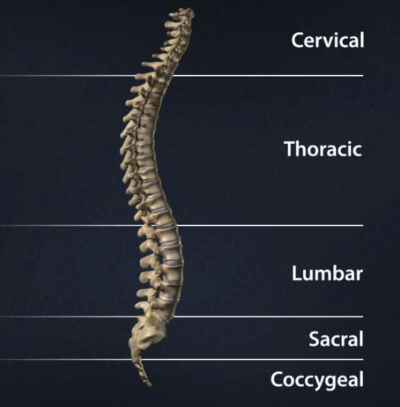
The human spine is composed of individual bones called vertebrae. While humans are born with 33 individual bones, several fuse during growth, typically leaving adults with 24 mobile vertebrae.
The spine is organized into five distinct segments:
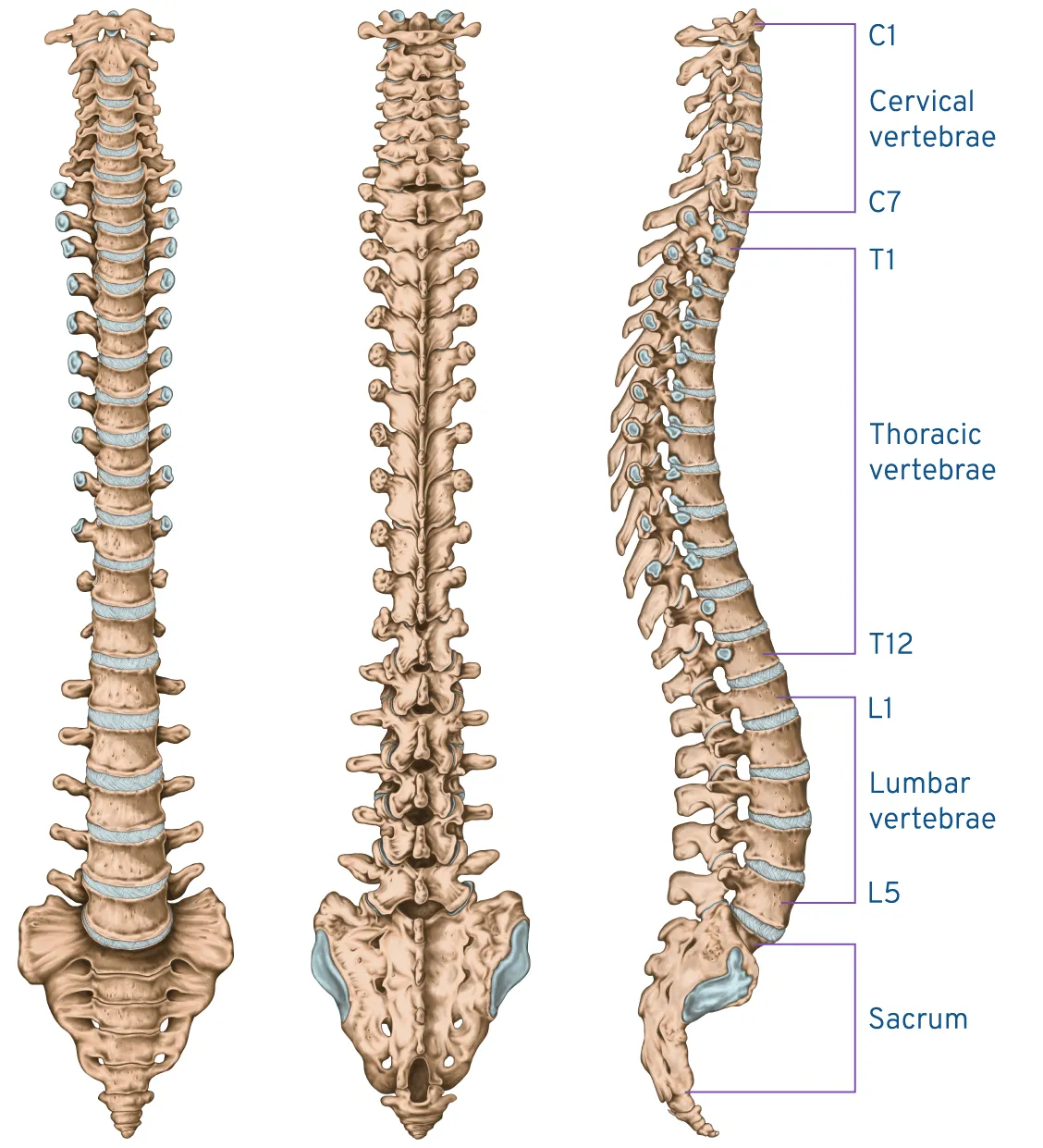
A healthy spine relies on a delicate balance of several components working in harmony
These small joints link vertebrae together, providing the flexibility to twist and turn while maintaining stability.
This is your body’s communication highway. 31 pairs of nerves branch out from the spine to carry messages between your brain and your muscles.
A network of ligaments, tendons, and muscles that act as the “cables” holding your structure in place and powering your movements.
This is your body’s communication highway. 31 pairs of nerves branch out from the spine to carry messages between your brain and your muscles
Spine pain often occurs when these components are disrupted. Common issues treated at Allevia Centers include:
Disc Herniation & Degeneration: Wear and tear on the shock-absorbing discs.
Spinal Stenosis: Narrowing of the spinal canal that puts pressure on nerves.
Facet Joint Arthritis: Inflammation of the joints that causes stiffness and aching.
Sciatica: Nerve compression that sends radiating pain down the legs.
Early intervention is critical to preventing long-term mobility issues. You should consult our spine specialists if you experience:
Back or neck pain accompanied by fever.
Numbness, tingling, or weakness in your arms or legs.
Pain that disrupts your sleep or daily activities.
Loss of bowel or bladder control (requires immediate attention).
Don’t let joint or muscle pain dictate your limits. Reclaim your mobility and get back to the activities you love with our personalized musculoskeletal
We provide expert care for chronic back and neck pain, spinal arthritis, disc disorders, and nerve compression. Our team focuses on restoring mobility through personalized, evidence-based recovery plans.
Allevia Centers combines advanced diagnostics with precision-guided treatments to target the root cause of pain. We prioritize minimally invasive, non-surgical solutions to help you return to an active lifestyle quickly.
Our centers offer a full range of interventional options, including epidural injections, radiofrequency ablation, and regenerative therapies. These treatments are designed to provide lasting relief without the downtime of traditional surgery.
We frequently perform outpatient procedures such as facet joint blocks, medial branch blocks, and spinal cord stimulation. Each procedure is performed with precision imaging to ensure maximum safety and effectiveness.
You should seek a specialist's evaluation if you experience persistent nerve weakness, loss of coordination, or pain that fails to improve with conservative care. Early intervention at Allevia Centers often prevents the need for major surgery.
Copyright © 2026 All Rights Reserved.
Site developed by